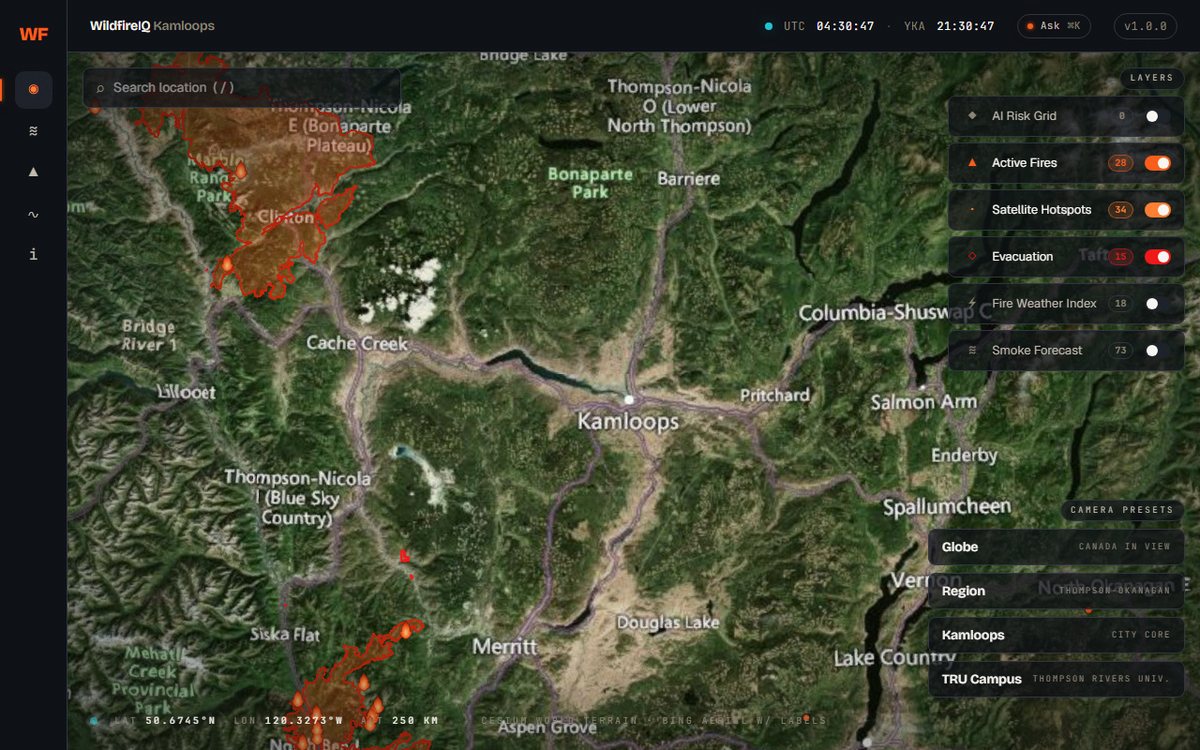
WildfireIQ Kamloops
A live 3D map that combines an in-house AI risk model with active fires, satellite hotspots, evacuation zones, fire weather and smoke forecasts for the Thompson-Okanagan region.
A community-governed home for Indigenous languages and the culture they carry.
Living Heritage carries Indigenous languages and the culture they hold. Each language lives in its own home, with its own community, its own collection and its own review, and nothing is shown until a person approves it. The first homes are Secwepemctsín (Secwépemc), Anishinaabemowin and Uyghur.
It is built on one idea: a language is not an archive. It stays alive because someone keeps saying it out loud and someone else keeps listening. The people whose language it is decide what happens to it, and everything that makes that true is enforced in the software, not only promised in a policy.
Content in the demo is drawn from public, openly licensed or public-domain sources and is shown for demonstration, pending community review. It is not treated as community-approved culture.
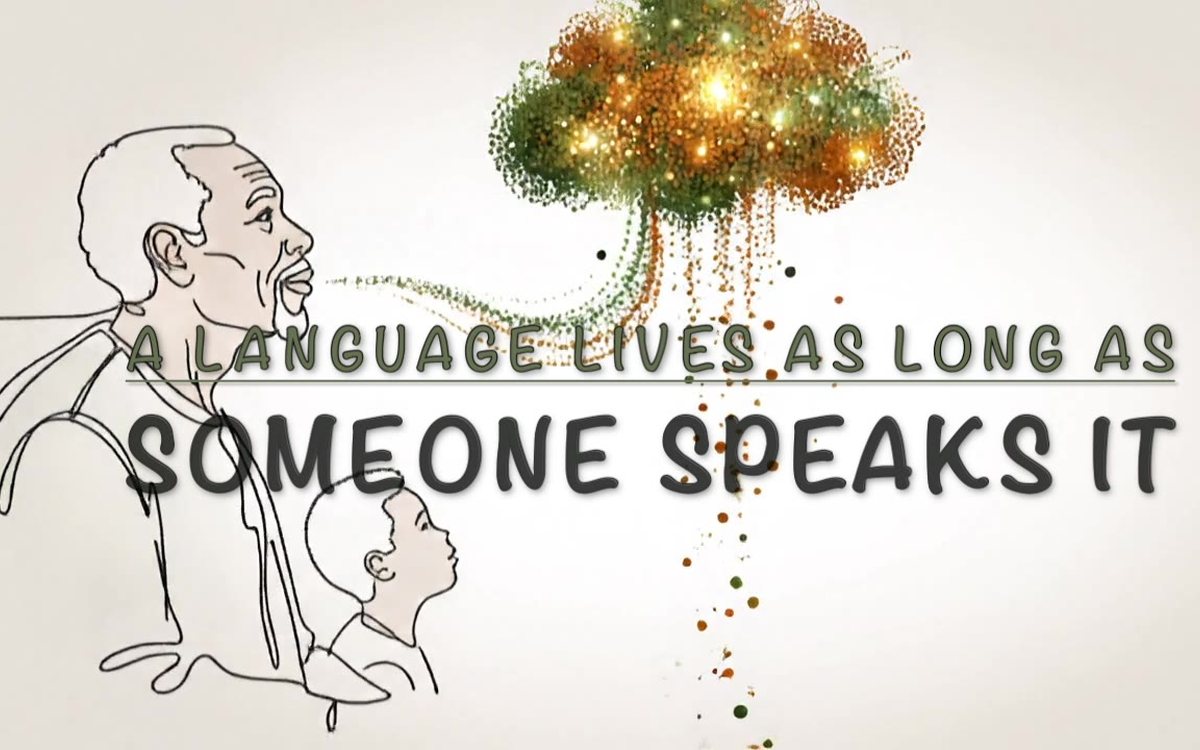
Preview of the live demo. Open it in a new tab ↗
Courses, spaced practice and a pronunciation coach that listens on your own device.
Each word lights up exactly as a speaker says it, one line at a time.
Search the collection by theme. People see only what they are entitled to see.
A first-person hall of the community’s artwork, with every piece labelled and credited.
Community members add recordings and stories, which stay private until a reviewer approves them.
Every language keeps its own members, collection, reviewers and pace, with nothing mixed together.
Every piece belongs to the community it came from and passes that community’s own review. Consent is recorded against the record and can be withdrawn later.
Recordings become lessons, pronunciation practice you can speak back to, and read-alongs, not files that sit in an archive.
Source, licence and knowledge holder travel with the material, alongside the Traditional Knowledge labels the community sets.
Sacred and ceremonial material is never taken in, whatever a licence might permit.
AI helps sort and describe a collection and is labelled wherever it does. Nothing it writes reaches a learner until a speaker of the language approves it.
Access tiers are enforced by the database itself, and every governed change is written to an activity log that names who made it.
| Year | Project | Funder | Amount | Role |
|---|---|---|---|---|
| 2026 | AI for Health and Healing — HorAIzon Presidential Initiative (team of three leads) | Thompson Rivers University | $130,000 | PI / Lead |
| 2026 | AI for Digital Preservation & Revitalization of Indigenous Languages in Canada | TRU UREAP Award | $7,000 | Supervisor |
A live 3D map that combines an in-house AI risk model with active fires, satellite hotspots, evacuation zones, fire weather and smoke forecasts for the Thompson-Okanagan region.
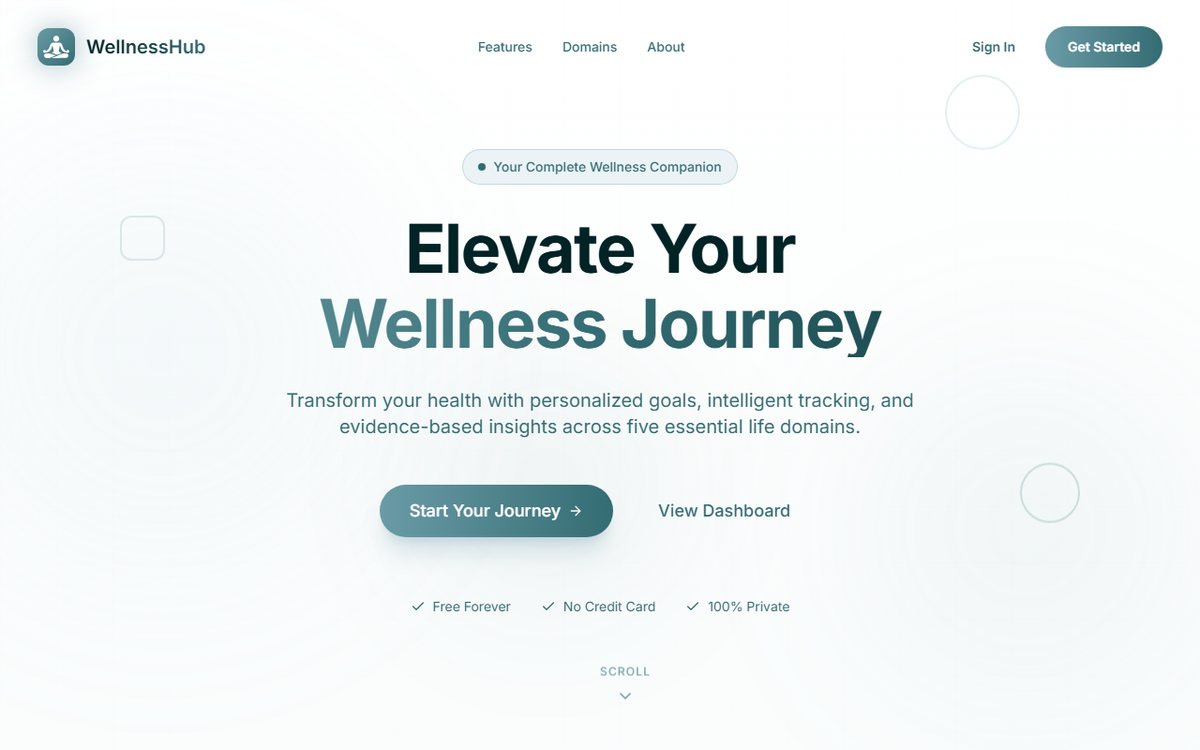
The flagship of AI for Health & Healing: goal setting, tracking, insights and an AI coach across five wellness domains, with private data. Demonstrated live to BC’s Minister of State for AI.
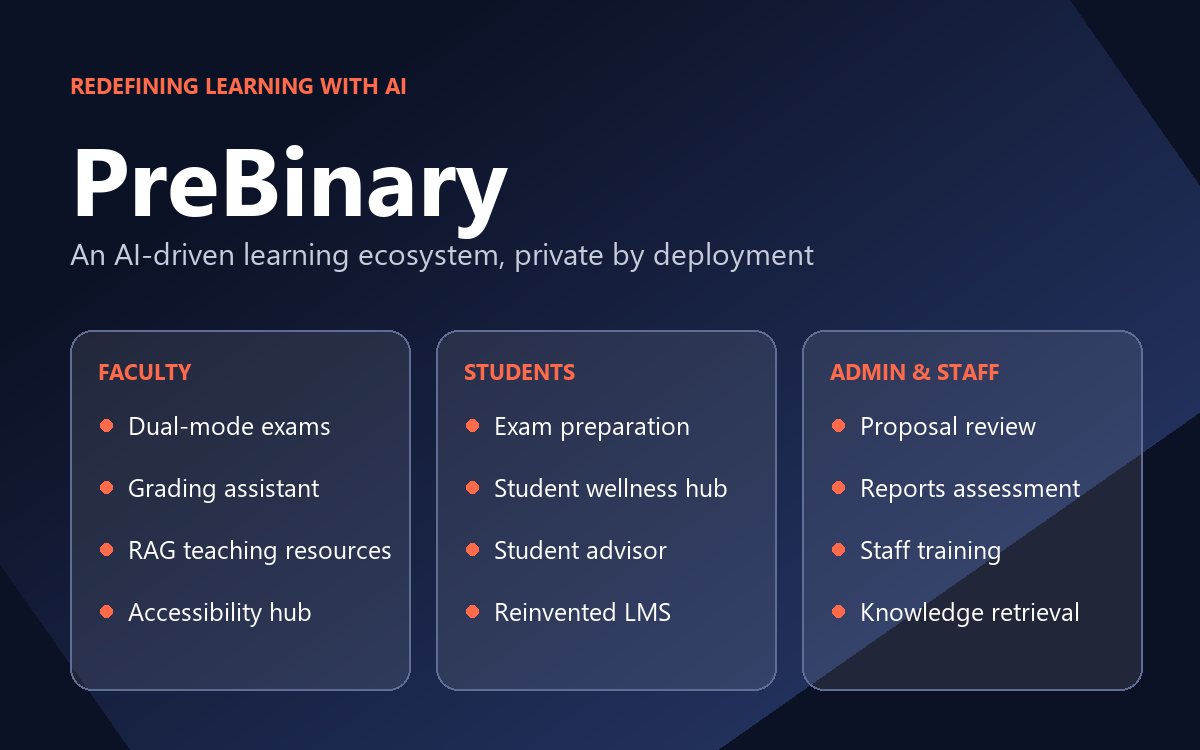
A next-generation learning platform for students, faculty and administrators that runs private, independent models and lets each feature use the AI model that suits it.
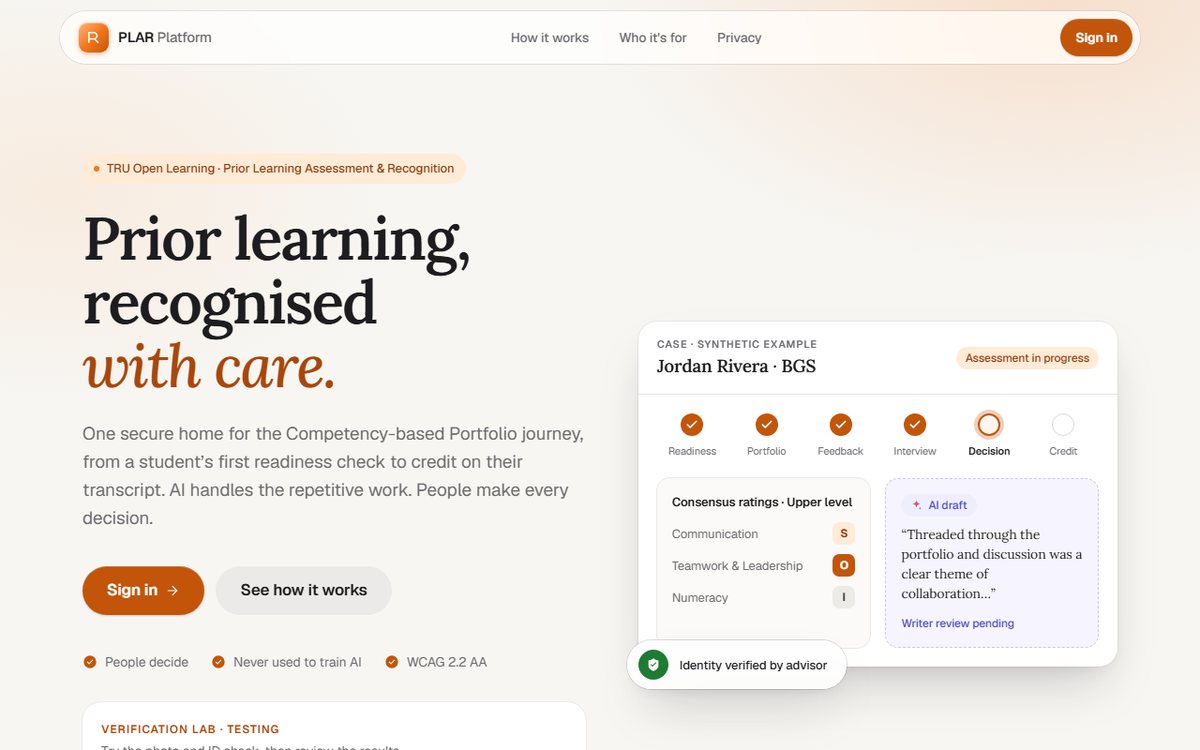
One secure home for the Competency-based Portfolio journey at TRU Open Learning, from a student’s first readiness check to credit on their transcript.
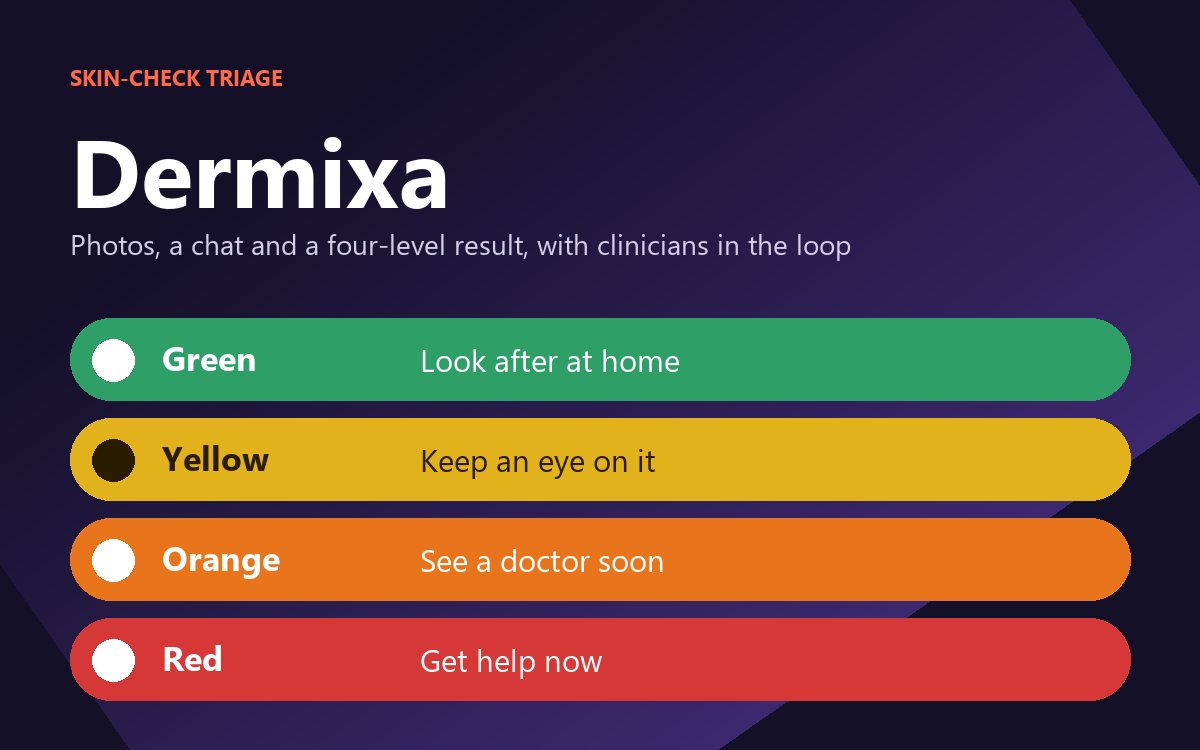
An AI skin-check app that turns a short chat and photos into a clear four-level result with self-care plans and hospital referral, managed through a clinician console.
AIRL works with universities, public bodies, communities and industry through Mitacs, tri-council programs and direct partnerships.